”PHRAG” - Protecting Habitats and Resources for All Generations
What are Phragmites?
The common reed (Phragmites australis australis), often referred to as just “Phragmites”, is a perennial grass originating in Europe. It is a hardy plant that spreads easily by seeds, stolons, and rhizomes. Phragmites grows rapidly and into dense stands where it outcompetes native species; forming dense stands that choke out aquatic and wetland habitats.
The Early Stages
The PHRAG project, which started as the “Indiginous Invasive Species Task Force” in 2022, was created with the goal of protecting species-at-risk, medicinal plants, and other culturally important species that would be impacted by phragmites. To this end, we wanted to combat and manage invasive species along the Eastern Georgian bay coastline by:
Building capacity through training with community, staff, and neighboring First Nations.
Building capacity by purchasing equipment needed to manage invasive species for several years
Creating a network of regional partners to support each other
Increasing our knowledge and understanding of the current spread and abundance of invasive species
Where are we now?
As of 2025, the PHRAG project is still ongoing and will continue into 2026. We’ve come a long way so far, with over 35 total sites mapped and managed across 85 kilometers of roadways. Over 20 sites have been revisited more than once for active management. At least 25 sites have been managed by partners including the Ministry of Transportation and Wasauksing First Nation. To help this all happen, a total of 8 partners have joined us in the endeavor to protect the wetlands of Eastern Georgian Bay.
Multi-year management: Why building capacity is imporant
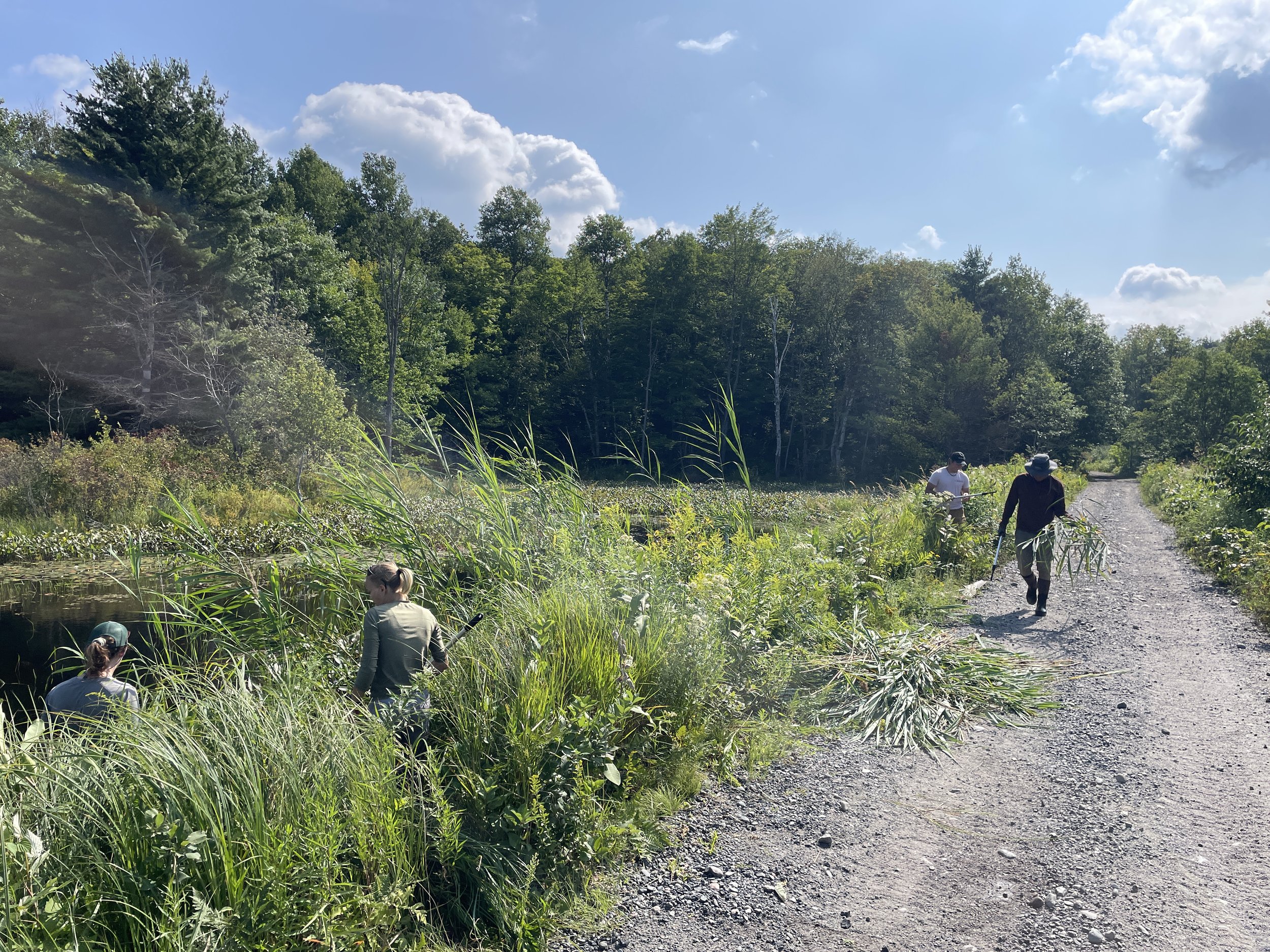
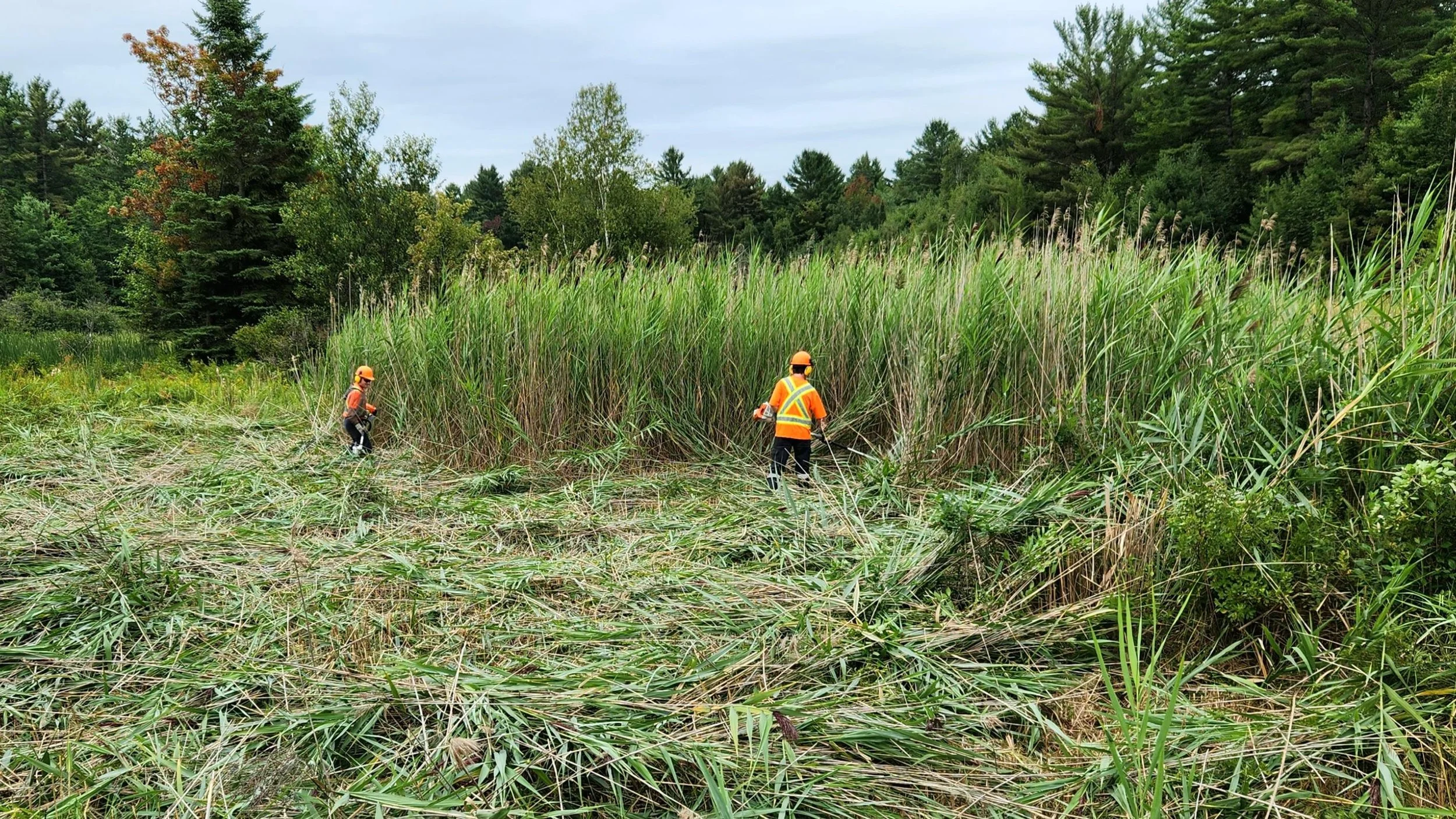
Managing phragmites is not a one-and-done procedure. Phragmites are extremely prolific, with the ability to spread multiple ways and a strong presence in the seed banks of the patches where they grow. Invasive species management at Shawanaga First Nation is a labour of love, requiring multiple years of intense manual removal. Teams enter a stand geared up with cane cutters, shovels, and for largers stands, even hedge trimmers.
The most ideal form of manual removal is “Cut to drown”; clipping the stem of the plant below the water line, which fills the hollow stem with water and drowns it. However phragmites will also grow on dry land, in which case using a spade on an angle to cut the stem below the ground with minimal soil disturbance is ideal. This way, sunlight cannot reach the severed stem. For the densest patches, mechanical removal with hedge trimmers is the most practical way to manage stands at the first visit (making sure to remove and bag seed heads first). Cut phragmites should ideally be bagged and burned or be left on dry land to rot.
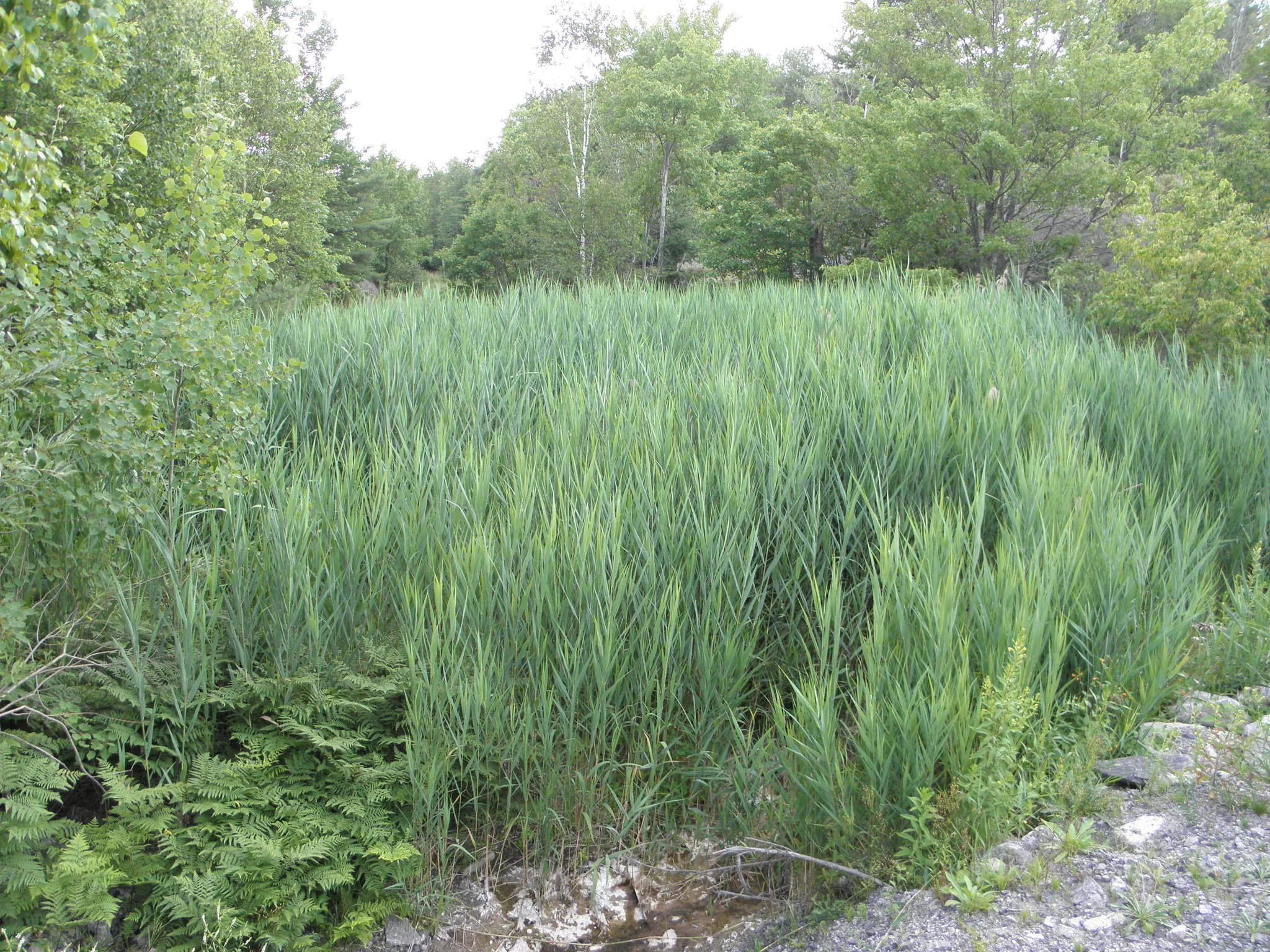
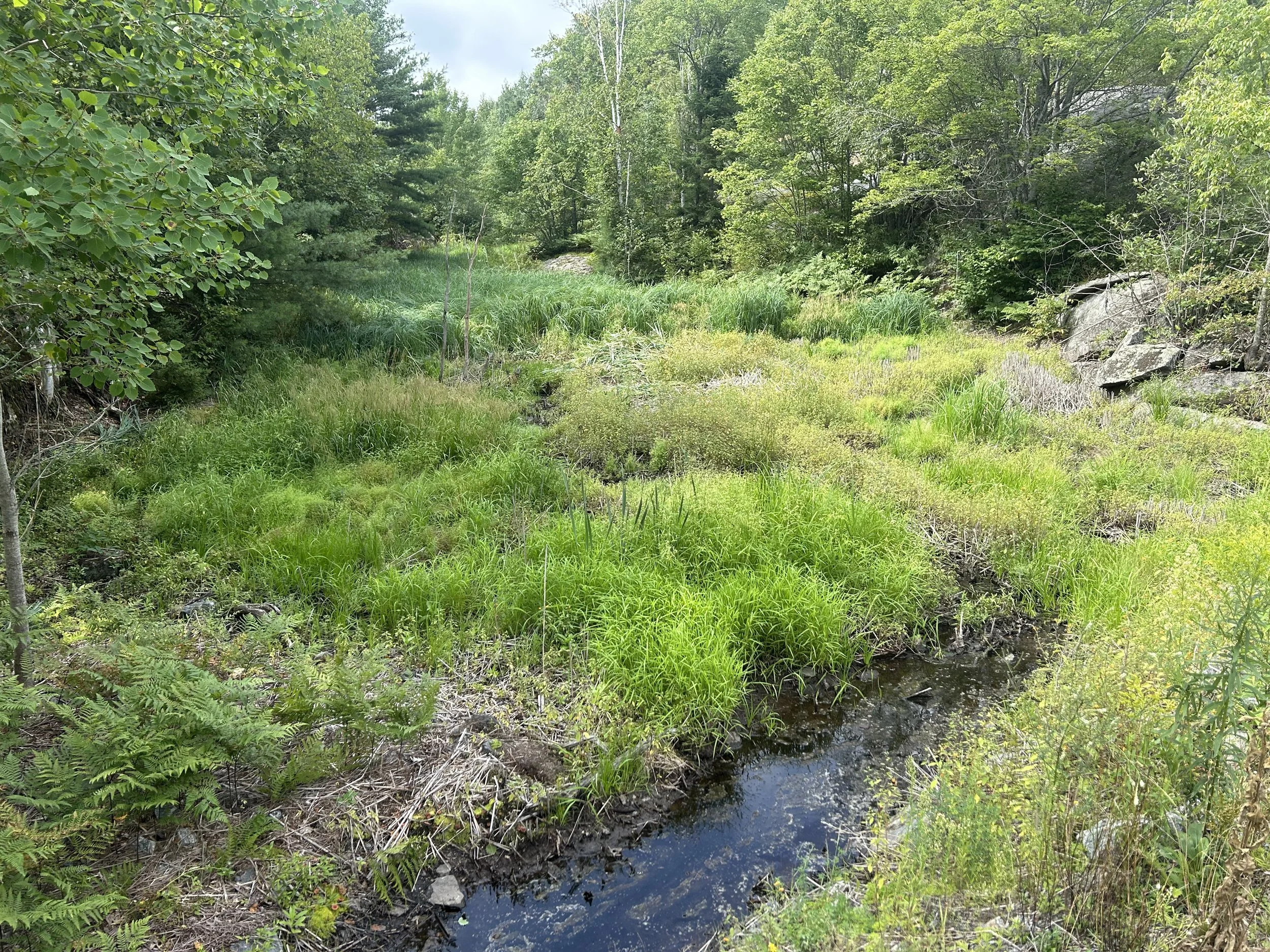
Building capacity within the community and with partners is so important as patches need to be managed for years to eradicate phragmites and give native plants room to reclaim the soil. For example, below is a before-and-after comparison of one of the original sites near Shawanaga First Nation that we have been managing actively since 2022. In the fourth year management, over 16 native wetland species have returned to the patch once dominated by phragmites.