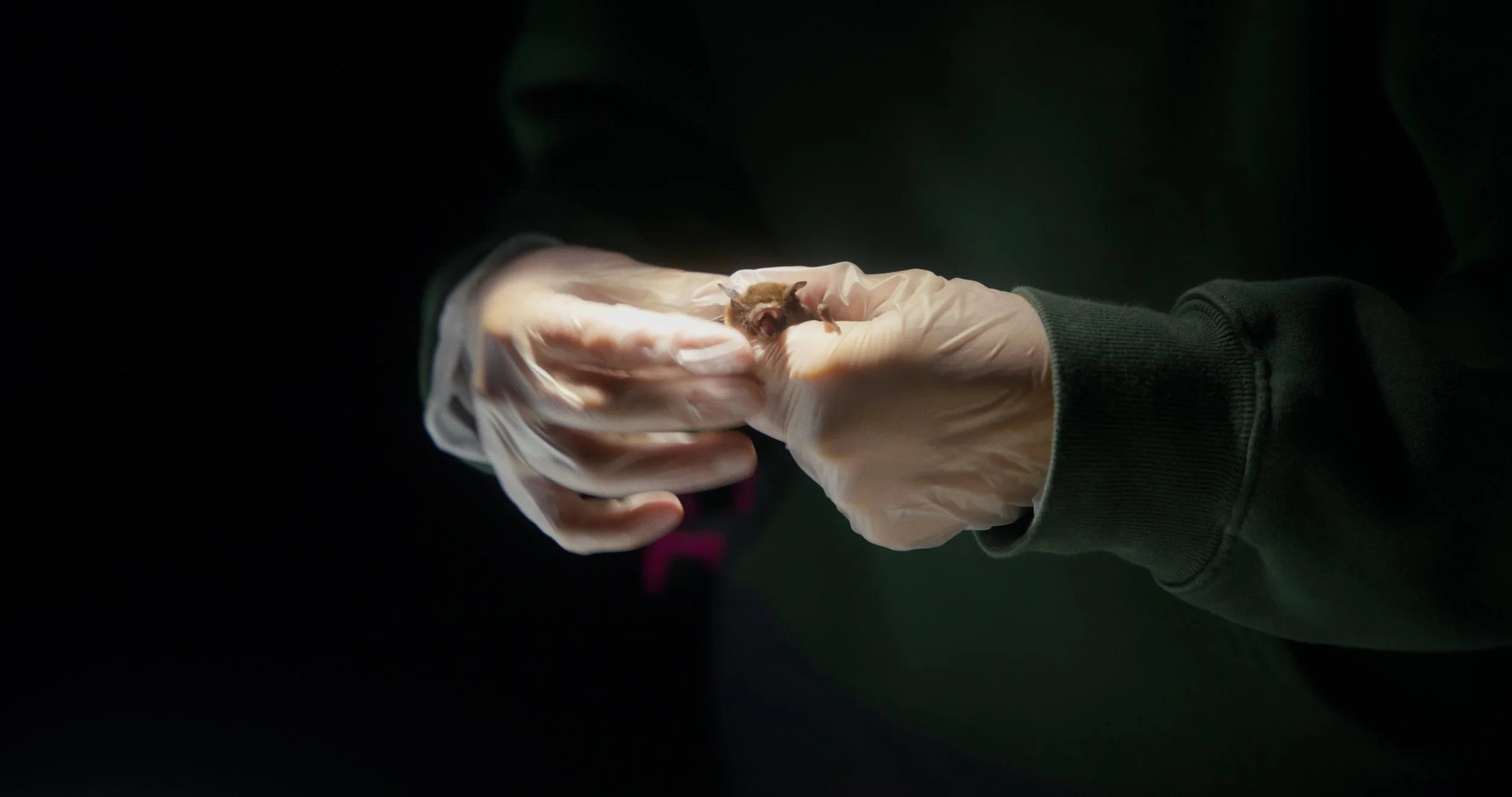
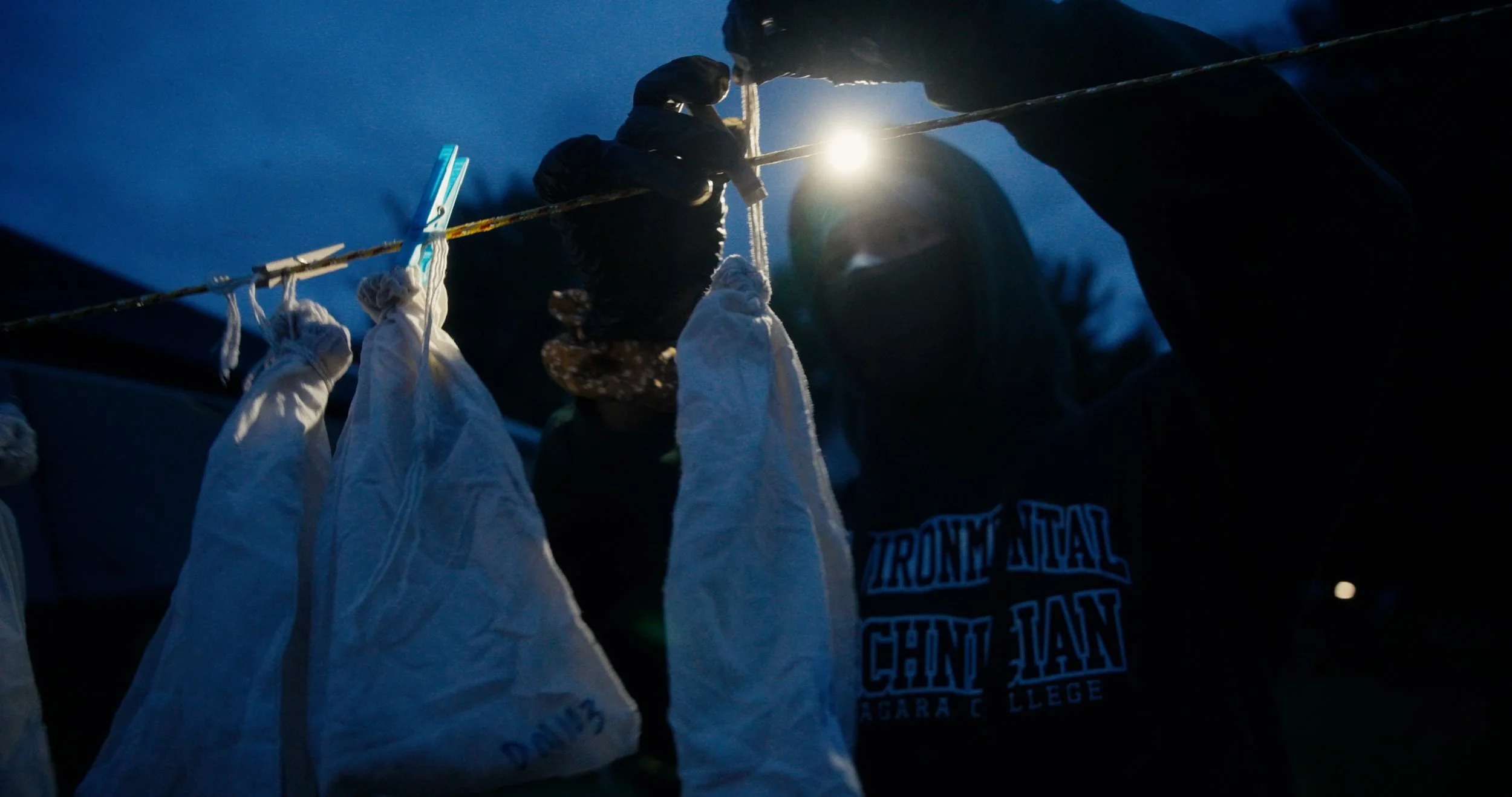
Bats of Georgian Bay - Apakwaanaajiinh Mnidoo Gami
Why study bats?
Four of Ontario’s eight bat species are endangered, and 3 of the remaining 4 have been assessed and recommended for the endangered species list this year. More than half of these species have been found here in Shawanaga. One of the main threats to the survival of these bats is the White Nose Syndrome fungus. This fungus was introduced to Ontario in 2010 and has since caused a major decline in resident hibernating bat populations. Another main threat to some of these species is mortality caused by wind turbines.
The project so far…
Shawanaga’s bat projects all started with a suggestion from the youth. Kids at Kinomaugewgamik Elementary School on the reserve tipped the team off to a colony of bats roosting in the old church building. This sparked the annual bat night at the church, where SFNSAR staff and community members gather to share an appreciation for the bats that call Shawanaga home.
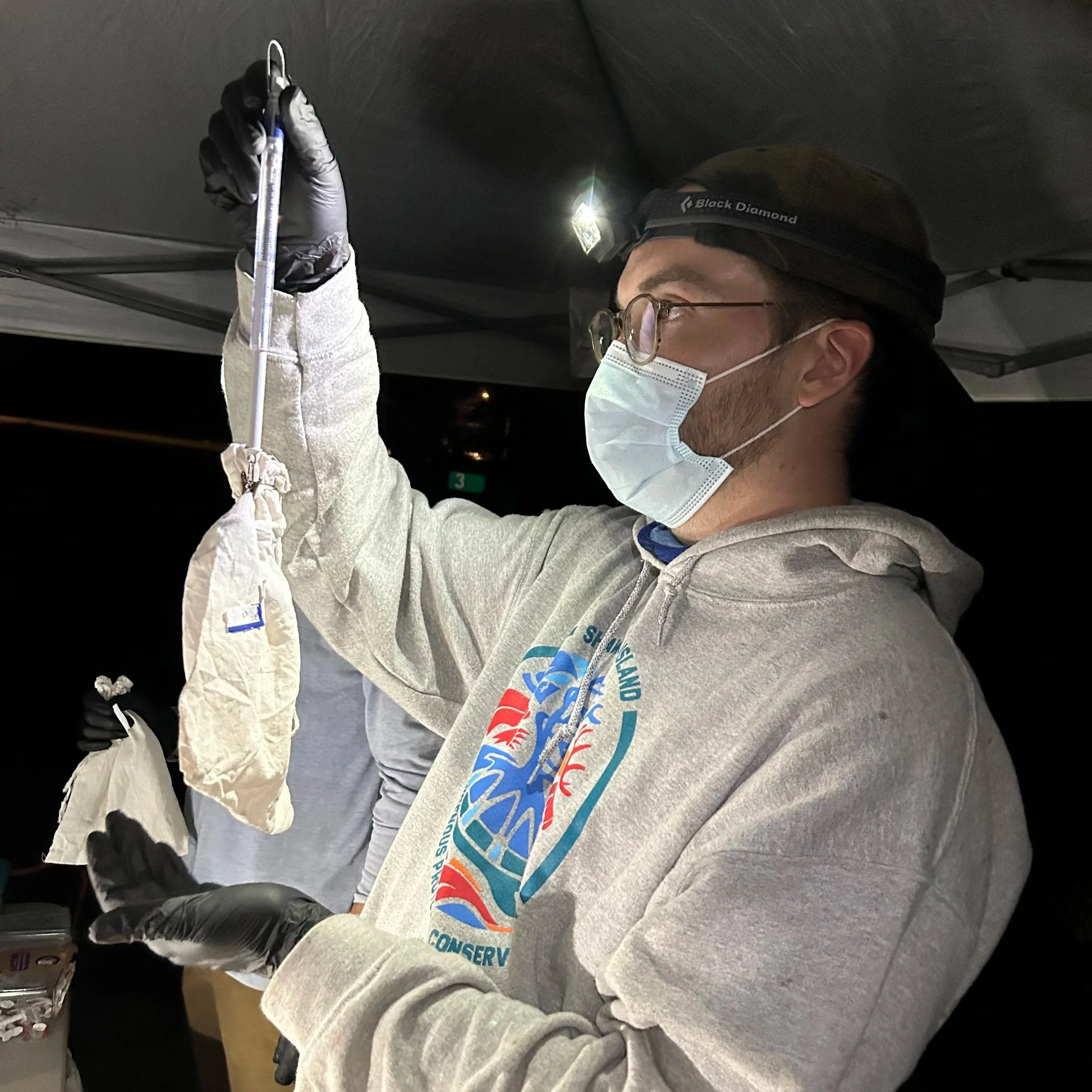
In 2021, we started the Apakwaanaajiinh Mnidoo Gami - Bats of Georgian Bay (AMG-BGB) initiative, to grow partnerships between Indigenous communities in the coastal region looking to preserve Ontario’s bat species. Our goal with this project was to help build capacity among First Nations, using our experience with bat work so that we can protect the bat species of Mnidoo Gamii. This would be accomplished through united research and monitoring, and would contribute to the overall management and understanding of critical habitats and bat populations in our region.
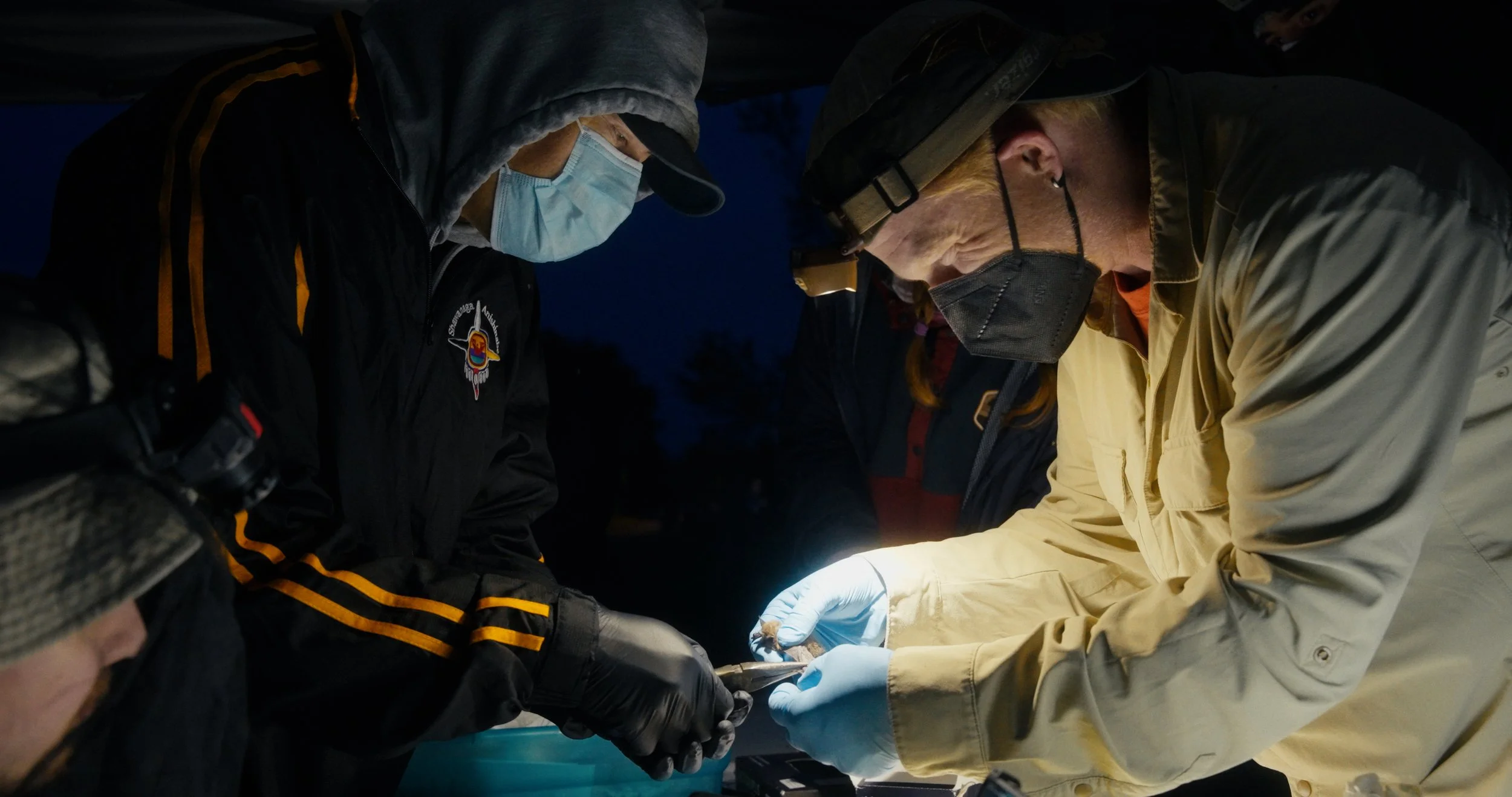
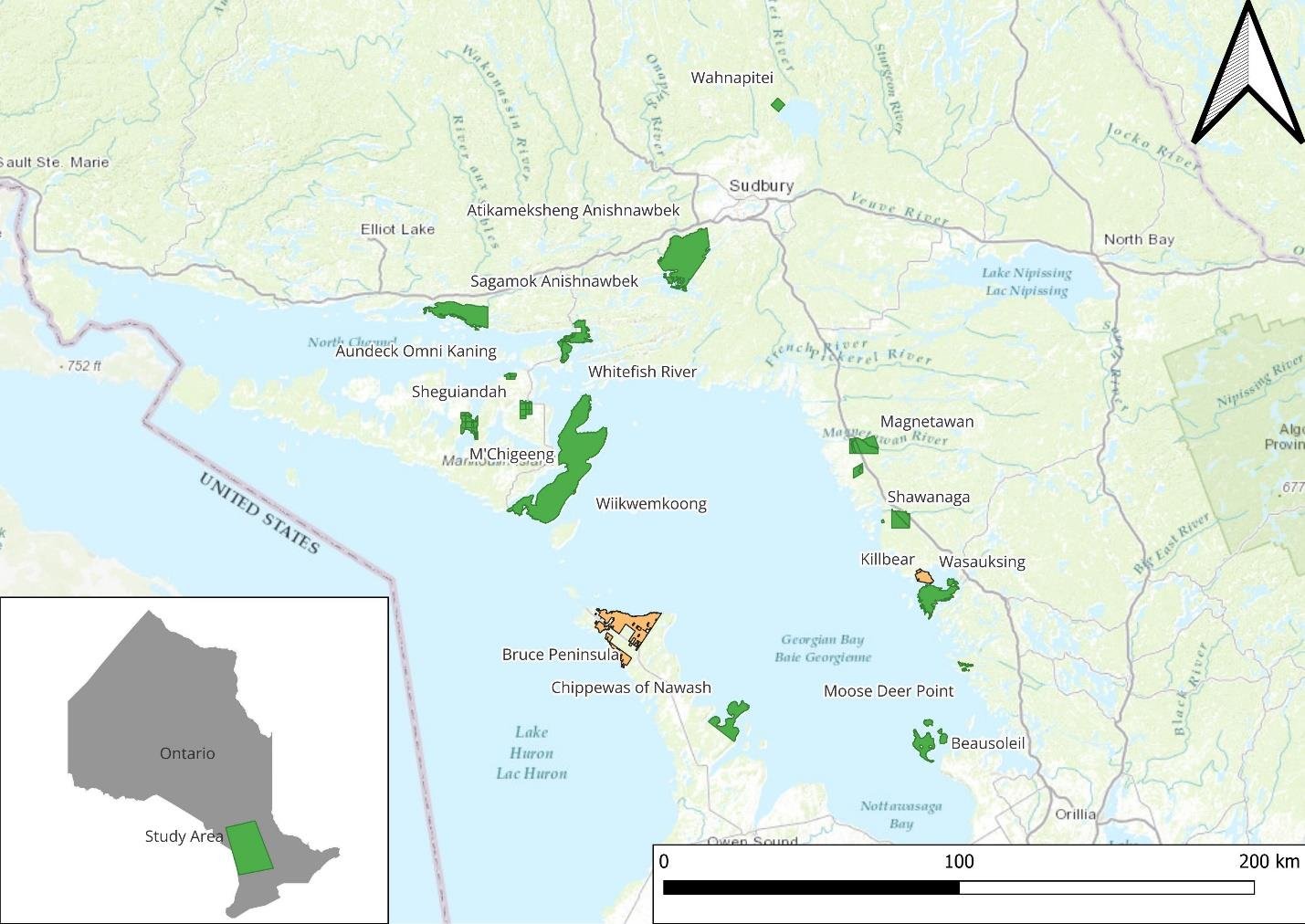
Shawanaga First Nation then collaborated with bat specialist Derek Morningstar and University of Guelph master’s student Michelle Beltran. We conducted bat netting and radio telemetry in the First Nations of Magnetawan, Moose Deer Point, Aundeck Omni Kaning, Saugeen, Whitefish River, and Wiikwemkoong Unceded Territory (among others - refer to map of partner communities).
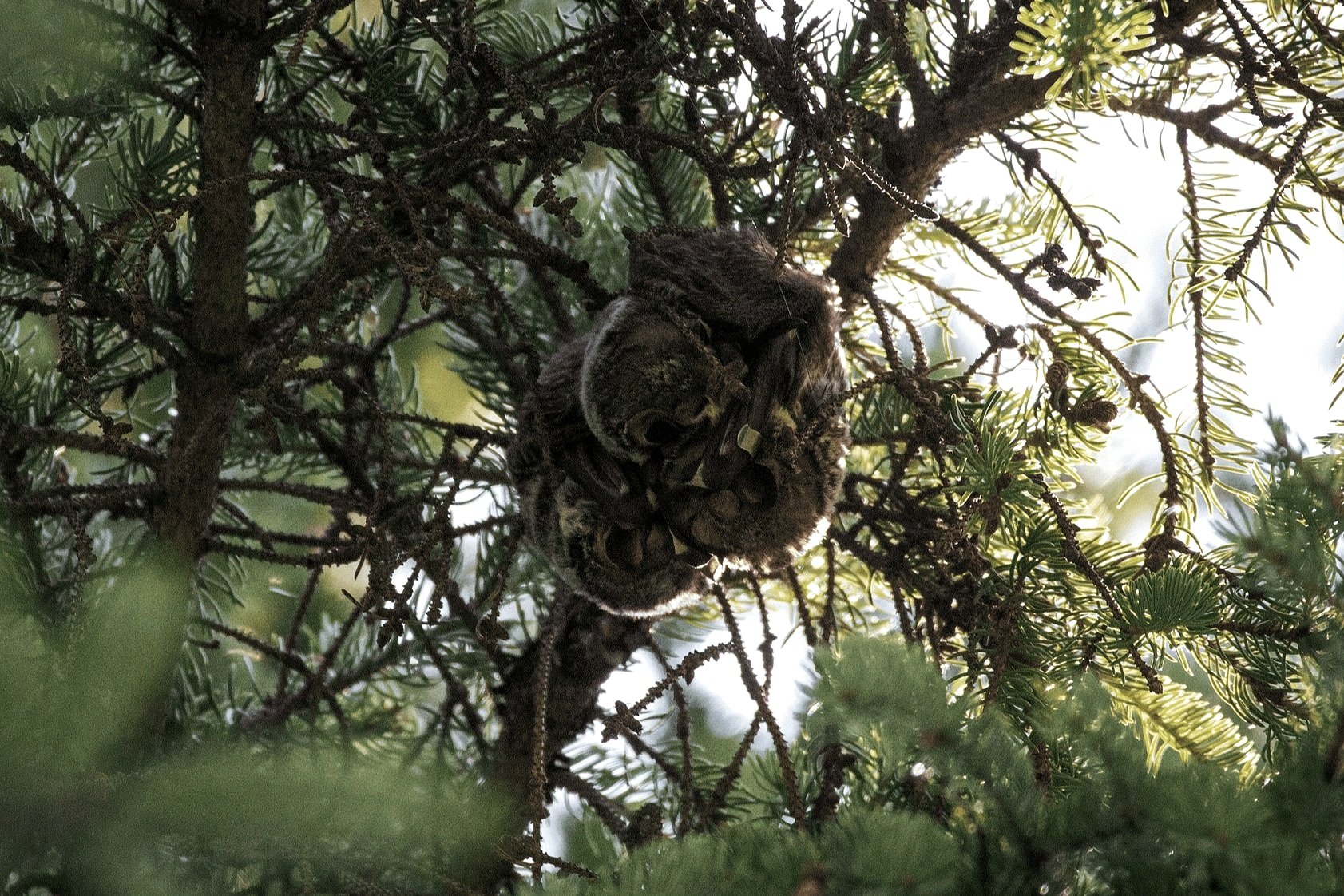
Through a combination of community knowledge and radio-telemetry, we were able learn about roosting behaviour and habitat use for native bat species. For example, we were able to document the first Hoary Bat maternity roost recorded in Ontario (see photo). This mother of two was roosting right here in Shawanaga! Shedding light on these topics allows us to fill knowledge gaps and strengthen our ability to protect at-risk bats.
Motus Network
The Motus Wildlife Tracking System is an international network of automated radio telemetry receiver stations. When a bat flies within range of a Motus tower, we learn the general area the bat was in at a certain time.
You can access the travel data of bats tracked on the AMG-BGB project on the Motus website by clicking here.
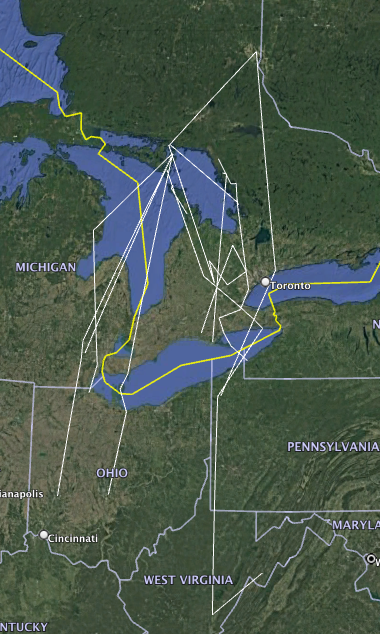
Using the Motus Wildlife Tracking System, we have been able to see where some bats are flying even if we could not find them on foot.
There are Motus system towers installed over much of the United States, allowing us to follow the rough travel pathways of some migratory species in addition to the local hibernators. For example, one silver-haired bat travelled from Wiikwemkoong Unceded Territory down the Bruce Peninsula, and ended up in West Virginia in just over a weeks time.
We also partnered with Birds Canada to add two Motus towers to the international network of stations in the Motus Wildlife Tracking System!
Moving Forward
Currently, our funding has ended for this project. Currently, SFNSAR is not conducting intensive bat field work apart from the annual community night in SFN and some work with the Bat Tunnel project. However, that does not mean it’s the end. SFN and its partner communities have come together to create an indigenous bat network, and nations in the group are interested in continuing this work. We will likely apply for more funding in the future if or when it is available. Michelle Beltran’s Master’s thesis will also be available and linked on our website upon completion.
You can learn more about the AMG project by checking out our Video Library, News Features, or the AMG story map written for Maamwi Anjiakiziwin by Neil Canvin (Natural Resources Coordinator, Wasauksing First Nation) & Steven Kell (Head Biologist, Shawanaga First Nation).