Railways & Turtles: Investigating Habitat Use and Risks
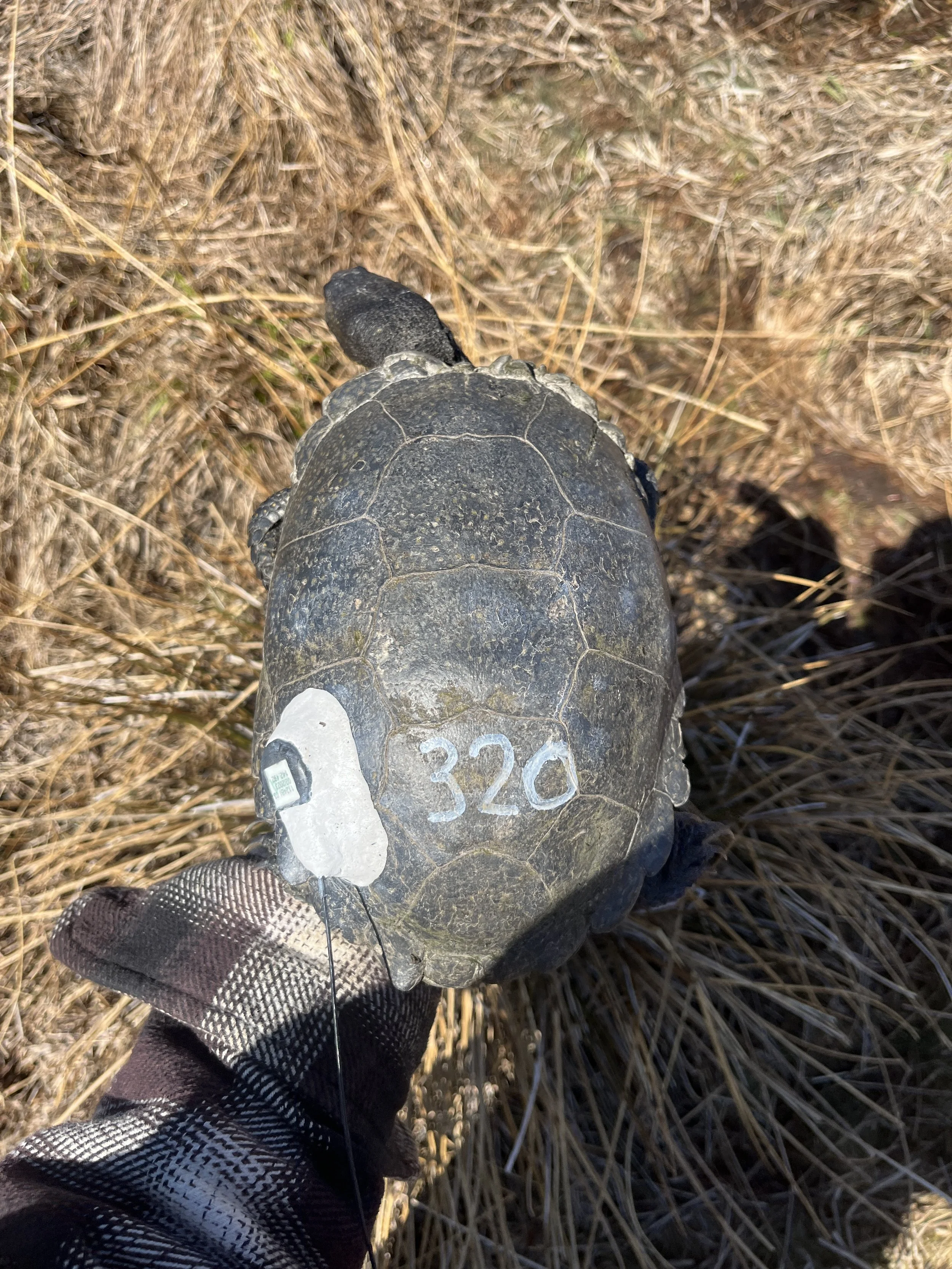
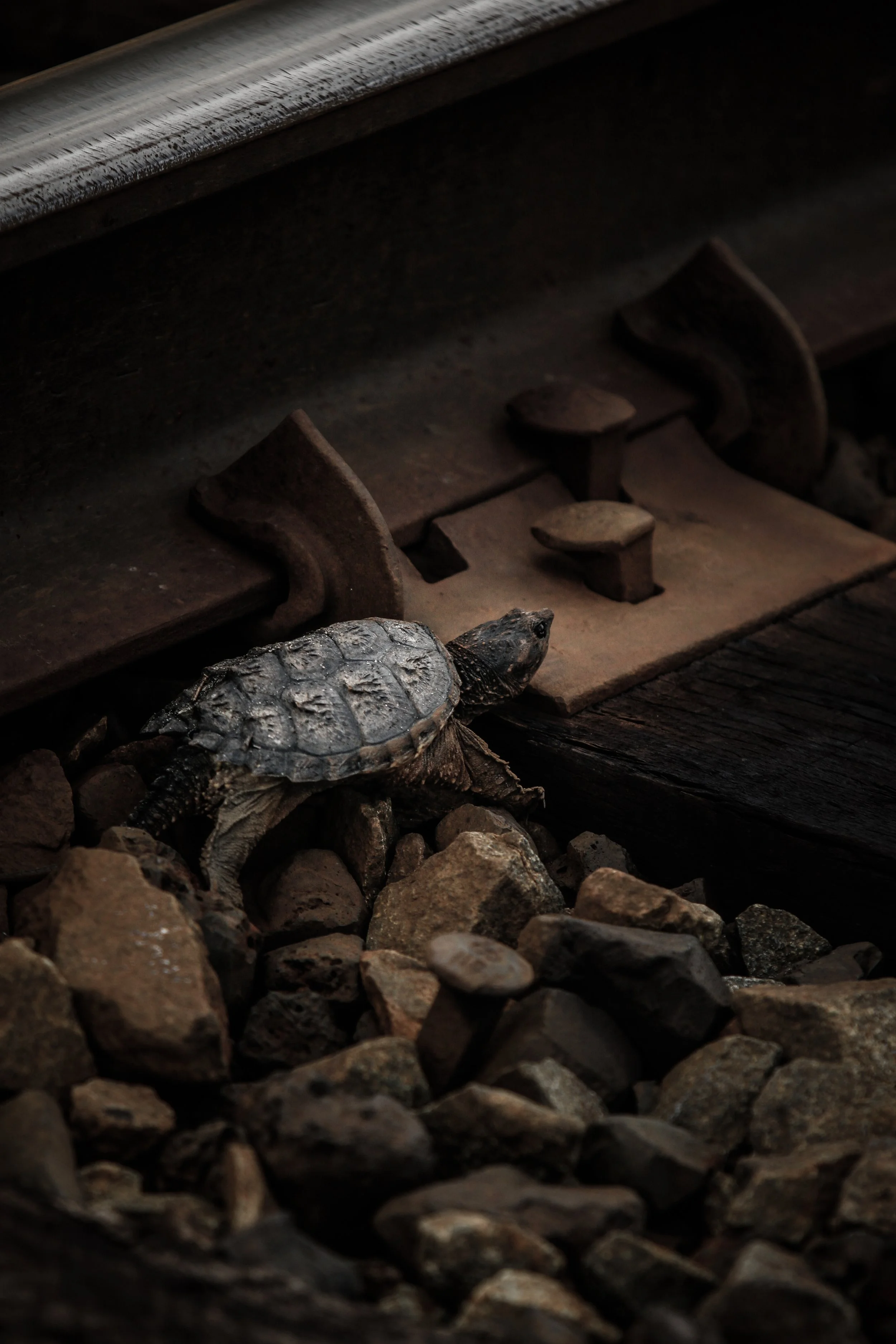
Building on previous railway ecology research (2019-2022) conducted in Shawanaga First Nation and Magnetawan First Nation, this project examines how turtles, particularly the threatened Blanding’s turtle, interact with railway infrastructure. A collaboration between Shawanaga First Nation, the University of Guelph, and Laurentian University, the study tracks both male and female turtles from spring emergence to hibernation to understand their habitat use and encounters with railway tracks.
Preliminary Findings
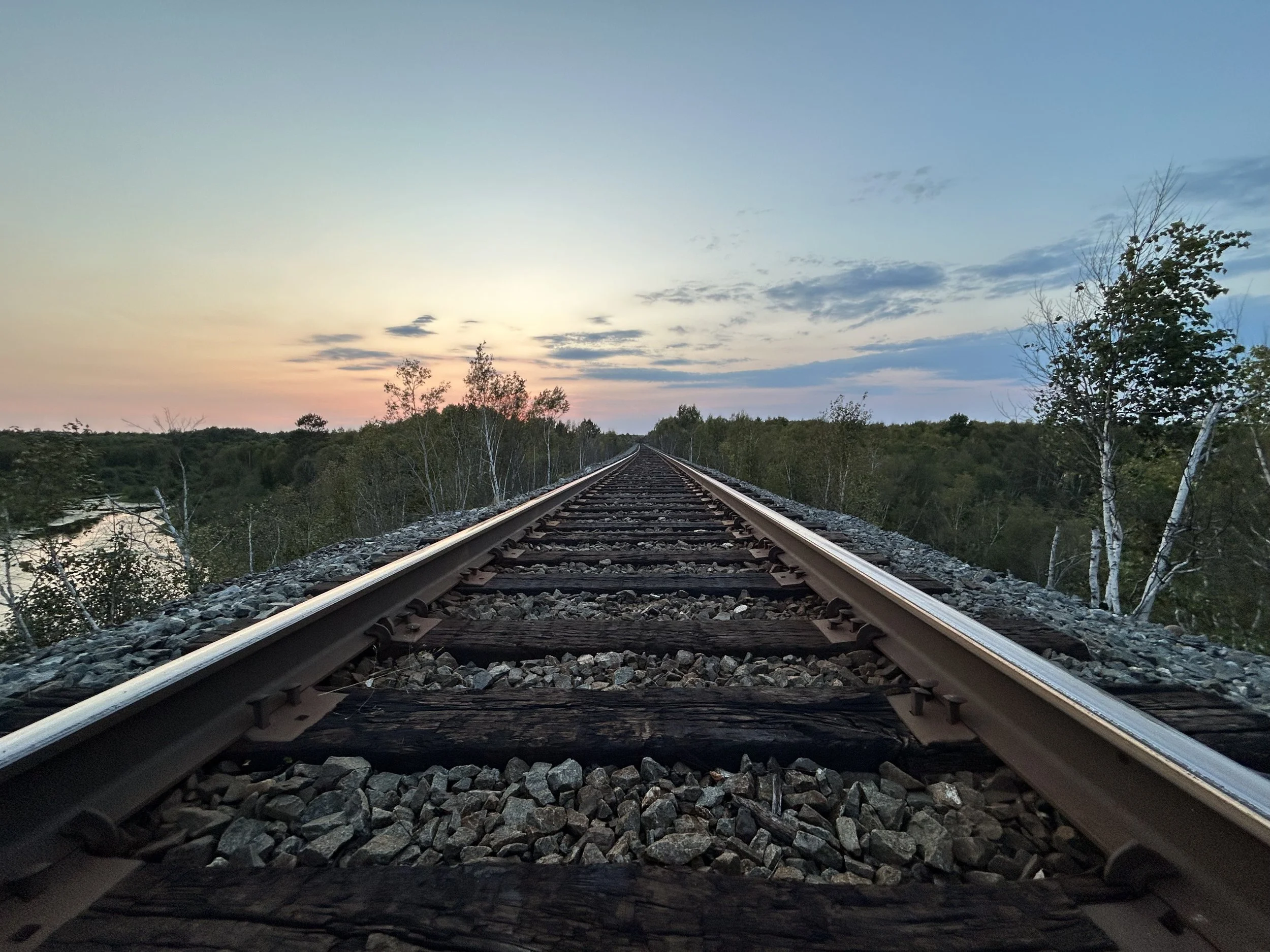
Field observations revealed that turtles frequently come into contact with the railway, with a notably high use by females during nesting season. Some nesting females were equipped with transmitters to track their movements and better understand their use of the train tracks. The findings suggest that railway use by turtles—especially nesting females—may be higher than previously thought, posing a significant risk of mortality.
Goals / Outcomes
This research, conducted as an undergraduate thesis project, will provide critical data to support future conservation efforts. The ultimate goal is to develop mitigation strategies that reduce the risk of turtles becoming trapped and dying on the railway, ensuring safer movement corridors for these at-risk reptiles.